Botanical skin oil

Softer skin, honestly evidenced.

Cyperus rotundus oil with five supporting botanicals and a peptide. Three published papers sit behind it, and we show you all three, limitations included.

  • 3Studies
  • 6Botanicals
  • 60 mlBottle size
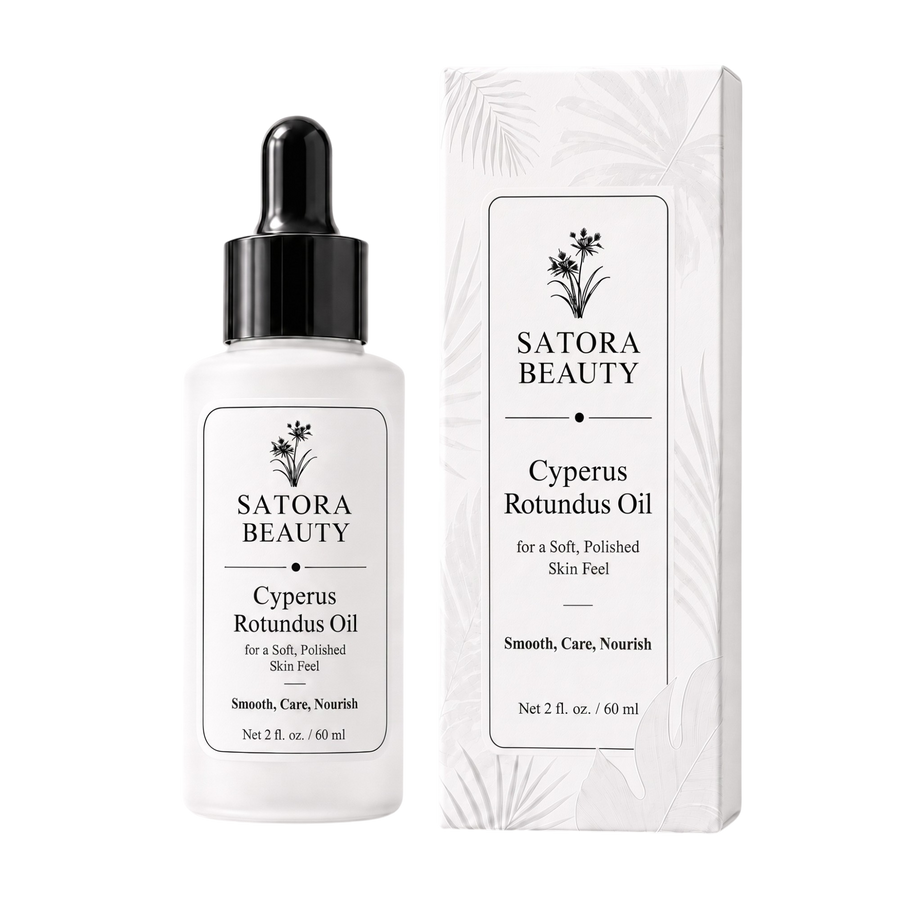
Satora Beauty Cyperus Rotundus Oil bottle beside its carton
  • Free shippingOn every order
  • 30 day returnsNo questions asked
  • Published researchLimitations stated
  • Seven ingredientsOne active, six supports
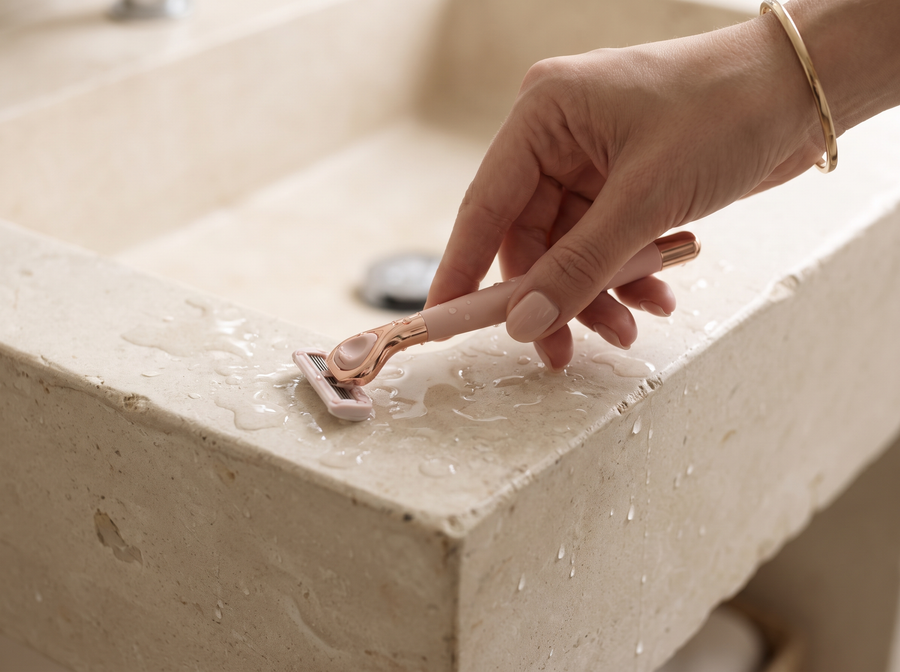
A razor resting on the edge of a stone basin in morning light

The loop

Removing hair is easy. Staying smooth is the hard part.

Every method on the shelf works on the hair you can see. None of them change what happens next, which is why most routines settle into the same four steps on repeat.

  1. 1You shave, wax or epilate.
  2. 2Two or three days later, stubble is back.
  3. 3Bumps, ingrowns and irritation follow.
  4. 4You do it again, a little sooner than last time.

A topical oil does not remove hair. It is used after removal, on the skin, with the aim of changing how regrowth comes back over months rather than days.

The real comparison

Six months, four ways

Every figure below covers the same six months, so they are directly comparable.

  1. Laser $900

    One course of clinic sessions

  2. Waxing $240

    A salon visit every six weeks

  3. Shaving $65

    Blades, cream, and the time it takes

  4. Satora Your course $63.90

    Three bottles, the full course

The same six months. Only one of them changes what grows back.

Start the six months

Estimates, not quotes. Salon and clinic prices vary a lot by provider and region, so treat these as a starting point rather than your exact bill.

See it in use

Thirty seconds, no jargon

What the oil looks like, how it goes on, and how it fits a normal week.

How it goes on.
Where it fits in a routine.
What is actually in the bottle.

How it is thought to work

Four proposed pathways

Four mechanisms have been proposed. All four are still proposals, none confirmed by a human study. We would rather say so here than let you find out later.

Slowing the conversion to DHT

Alpha-cyperone, the most abundant compound in the oil, shows inhibitory activity against 5-alpha reductase in laboratory assays. That enzyme converts testosterone into DHT at the follicle, and DHT is what drives the active growth phase in androgen-sensitive hair.

In vitro evidence. Laboratory activity does not automatically translate to the same effect on skin.

Why this matters

It matched laser overall, and kept working where laser cannot.

Across the hair it was tested on, the oil performed comparably to Alexandrite laser. What makes the result interesting is the edge case. Laser needs pigment to find a follicle, and on white hair it has none to find, yet the oil still did better there. That points to it acting on the follicle itself rather than only through pigment or hormones, which is why it is not limited to one hair colour.

The research

Three papers, and what they actually say

Most brands in this category cite the research without describing it. Here are all three papers, what each one measured, and the limitations we think you should weigh before buying.

2014 Aesthetic Surgery Journal

Oil compared against Alexandrite laser

An open-label pilot study. 65 participants enrolled and 60 completed six months, comparing the oil against saline and against Alexandrite laser on underarm hair only. No side effects were recorded.

Overall results did not differ significantly between the oil and the laser. On white hair specifically, the oil performed significantly better.

View the paper
2022 Journal of Cosmetic Dermatology

Comfort after laser treatment

153 participants. The oil was compared against hydrocortisone and against saline for pain and redness following laser sessions.

The analgesic effect favoured the oil. The authors concluded it was safe and cost effective for post-treatment comfort.

View the paper
2025 Dermatological Reviews

A review of the proposed mechanisms

A narrative review rather than new primary data. It sets out the flavonoid and androgen competition model alongside 5-alpha reductase inhibition.

Useful for understanding the theory. It does not add new clinical evidence of its own.

View the paper

What this evidence does not establish

  • All three papers share a single author. No independent team has replicated the results.
  • The 2014 study was open label, not blinded, and describes itself as a pilot.
  • Only underarm hair was studied. Arms, legs and the bikini line are extrapolation.
  • Sixty completed participants is a small sample by clinical standards.
  • No dose response data exists, and no standard concentration is defined for the category.
  • Results in the trial were measured at six months, not in days or weeks.

Before you buy

Is this actually for you?

We would rather lose the sale than have you buy the wrong thing. Start with the list headed probably not for you.

Likely a good fit

  • You already remove hair regularly and want to change how the regrowth comes back.
  • You want something that works on any hair colour, not only dark hair.
  • You get bumps or ingrowns after shaving, waxing or epilating.
  • You can realistically apply something twice a day for three to six months.
  • You would rather read the actual study than a marketing claim.

Probably not for you

  • You want visible hair reduction within days or weeks.
  • You are expecting permanent removal. Nothing here supports that.
  • You want a one-off treatment rather than a daily habit.
  • You need a stronger evidence base than one pilot study from a single research group.
  • You have known sensitivity to tea tree or other essential oils.

If anything under probably not for you describes you, do not buy this. Nothing in the research supports a faster or more permanent result than the one described here.

What to expect

This is a months product, not a days product

Anything promising visible hair change in a week is selling you something else. The trial that makes this ingredient interesting ran for six months. Here is an honest version of that timeline.

  1. Days 1 to 14

    Skin first, not hair

    What you should notice early is the skin, not the hair. Tea tree and aloe are working on the bumps and irritation that follow shaving or waxing. Expect nothing on regrowth yet.

  2. Weeks 3 to 8

    Build the habit

    Keep applying twice daily and continue after each hair removal. Consistency matters far more than how much you use. Most people who give up do it in this window, before the studied period has even started.

  3. Months 3 to 6

    The studied window

    This is the period the 2014 trial actually measured, on underarm hair. If the oil is going to change how your regrowth comes in, this is where researchers observed it happening.

If six months of consistent use changes nothing for you, this product is not working for you. That is a real possibility, and it is why the returns policy exists.

The formula

Seven ingredients, each with a job

One studied active, five supporting botanicals and a peptide. No fragrance added for its own sake, no filler that exists only to lengthen the list.

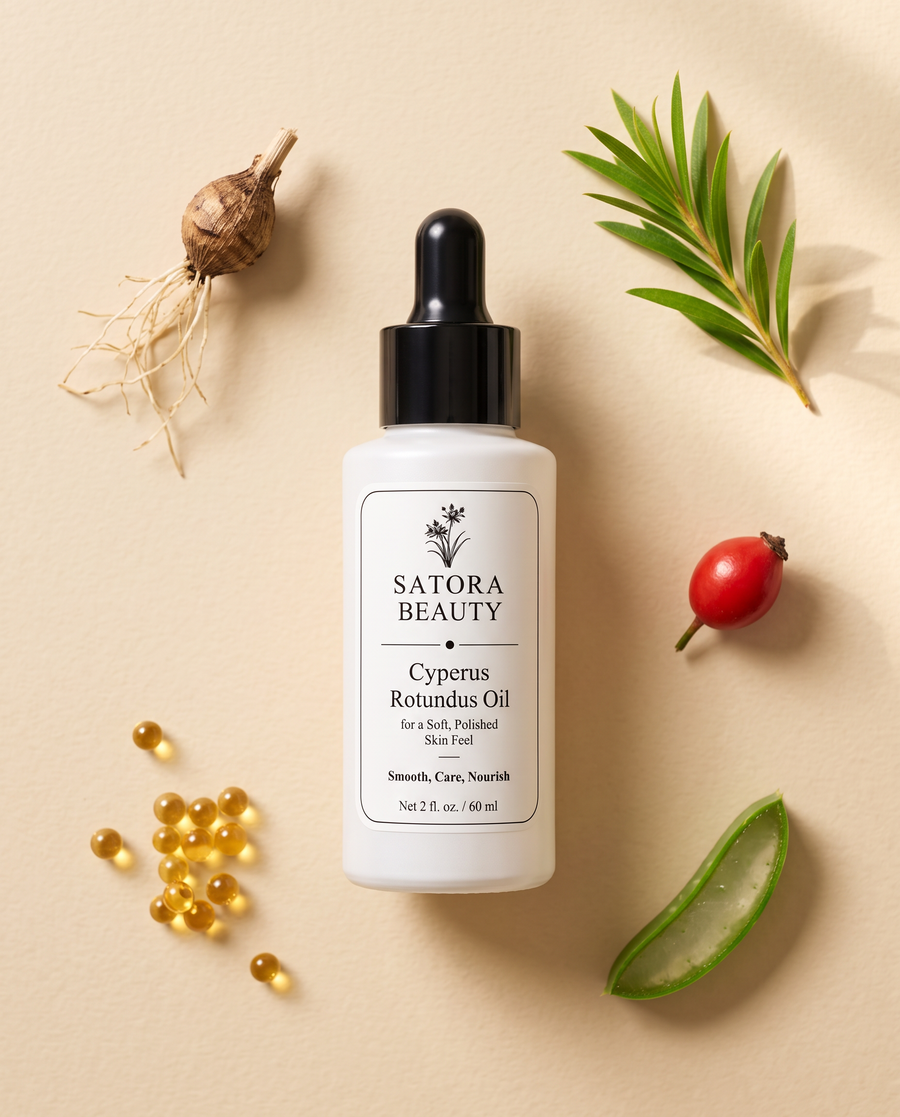
Satora Beauty Cyperus Rotundus Oil bottle in a flat lay with nutgrass tuber, tea tree, rosehip, jojoba and aloe

Cyperus rotundus oil

The studied active, steam distilled from the tuber of the sedge. This is the ingredient the three papers are about.

The active

Tea tree oil

Antimicrobial. Aimed at the bumps and folliculitis that follow shaving, waxing and epilating.

Jojoba oil

Technically a wax ester rather than an oil, and the closest botanical match to skin's own sebum. Absorbs without sitting on the surface.

Sweet almond oil

A light emollient carrier. Softens and helps the blend spread evenly over larger areas like legs.

Rosehip oil

Rich in linoleic acid. Supports the skin barrier where repeated hair removal has worn it down.

Aloe extract

Soothing, and the reason the oil is comfortable to apply straight after removal rather than hours later.

Acetyl Tripeptide-1

A peptide complex. Supports skin recovery and strengthens the barrier after hair removal.

Patch test on the inner forearm before first full use, and give it 24 hours. Essential oils are a common source of contact sensitivity, and tea tree in particular is worth testing if you have not used it before.

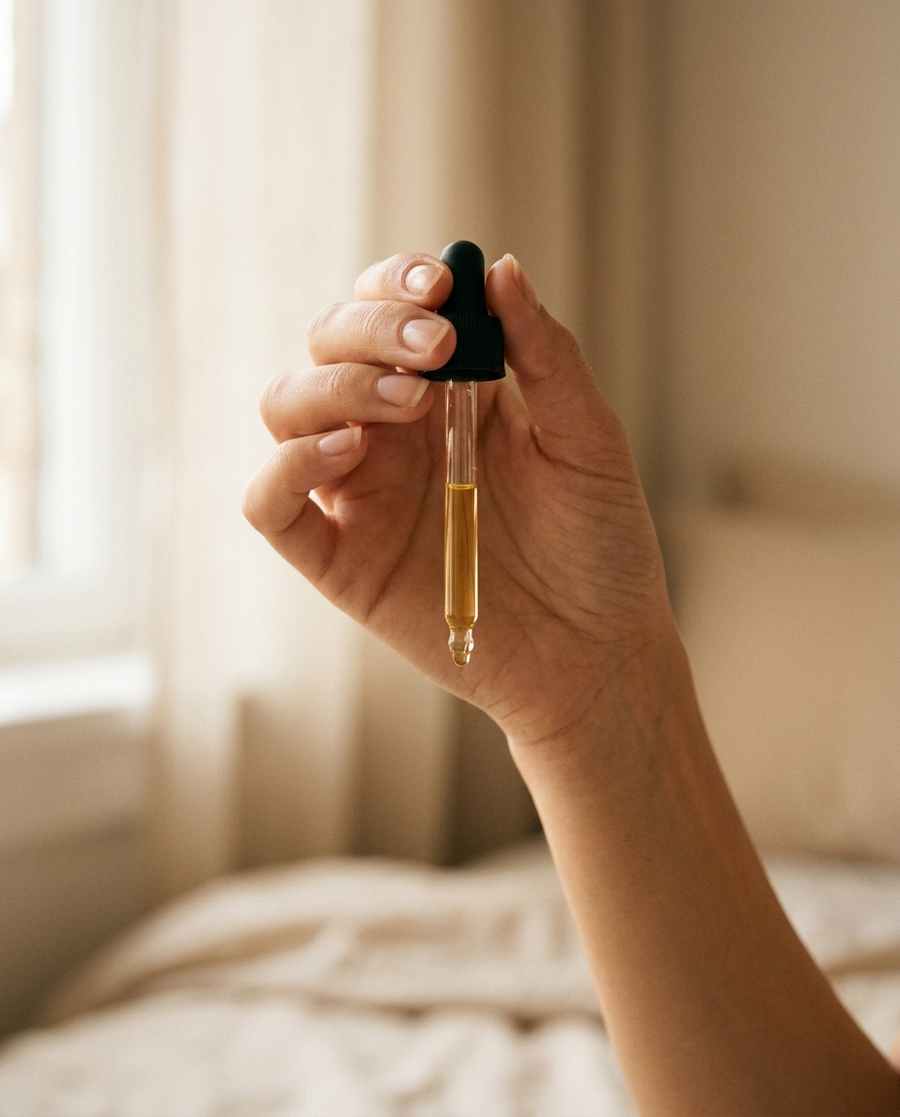
Hand holding a glass dropper of golden oil up to window light

How to use it

Four steps, twice a day

The routine only works if it survives contact with a normal week. Keep the bottle where you already stand after a shower.

  1. 1

    Remove the hair first

    Shave, wax, sugar or epilate as you normally would. This oil is applied to skin after removal. It does not remove hair itself.

  2. 2

    Start on clean, dry skin

    Pat the area dry. Oil applied to damp skin sits on the water rather than absorbing into it.

  3. 3

    Three to five drops, massaged in

    Work it in until it disappears rather than leaving a film. More product does not speed anything up. A 60 ml bottle is sized for months of use.

  4. 4

    Twice daily, and keep going

    Morning and night, and again after every hair removal. The research measured results at three to six months, so consistency is the entire mechanism as far as you are concerned.

Patch test on the inner forearm and wait 24 hours before the first full application. If you are pregnant, breastfeeding, or treating broken or irritated skin, speak to a doctor first.

Honest comparison

How it sits against the alternatives

Not a replacement for hair removal. Used alongside it.

MethodThis oilLaserWaxShave
Changes regrowth
Any hair colour
Painless
Use at home
Cost$39.90 $$$ $$ $
Time needed20 sec Clinic Salon Every 2 days

Comparison of methods, not of specific brands.

Costs vary by provider and region. Claims about this oil refer to the 2014 open-label pilot study on underarm hair. Brand names are the property of their owners and we are not affiliated with them.

Questions

The things people actually ask

Including the ones with answers we would rather not have to give.

Does this oil remove hair?

No. It is a topical skincare oil applied to the skin after you have removed hair by your usual method. The research looked at whether regrowth comes back finer and slower over months, not at removing hair that is already there.

How long before I see anything?

The trial behind this ingredient measured results at three to six months. In the first few weeks you should expect to notice the skin feeling calmer rather than any change in hair. If you want a product that does something visible this week, this is not it.

Does it work on my hair colour?

In the published trial the oil performed comparably to Alexandrite laser across the hair it was tested on, so it is not aimed at one hair colour. The notable extra finding was on white hair, where laser has no pigment to target and the oil still did better. We want to be precise about that specific result though: it was measured on white hair, and has not been separately shown for blonde or red.

Is it safe?

No side effects were recorded in the 2014 study. That said, it contains essential oils including tea tree, which is a recognised source of contact sensitivity. Patch test on your inner forearm and wait 24 hours before your first full application. If you are pregnant or breastfeeding, speak to a doctor first.

Can I use it on my face?

The published study covered underarm hair only. Any use elsewhere, including the face, is outside what has been formally studied. Facial skin is more reactive, so patch test carefully and stop if you see irritation.

How long does one bottle last?

At three to five drops twice daily on a moderate area, a 60 ml bottle is intended to cover a substantial part of the three to six month window. Larger areas such as full legs will use it faster.

What if it does not work for me?

It may not. The evidence base is one pilot study, one trial and one review, all from a single research group, with no independent replication. We would rather you knew that before buying than after. Returns are open for 30 days.

Start the six months

Worth trying, on the evidence as it stands

One pilot study, one trial, one review, all from a single research group. That is a genuine reason for caution and also the most evidence any oil in this category has. You can decide what that is worth with the same information we have.

Shop the oil39.90 for 60 ml. Free shipping, 30 day returns.
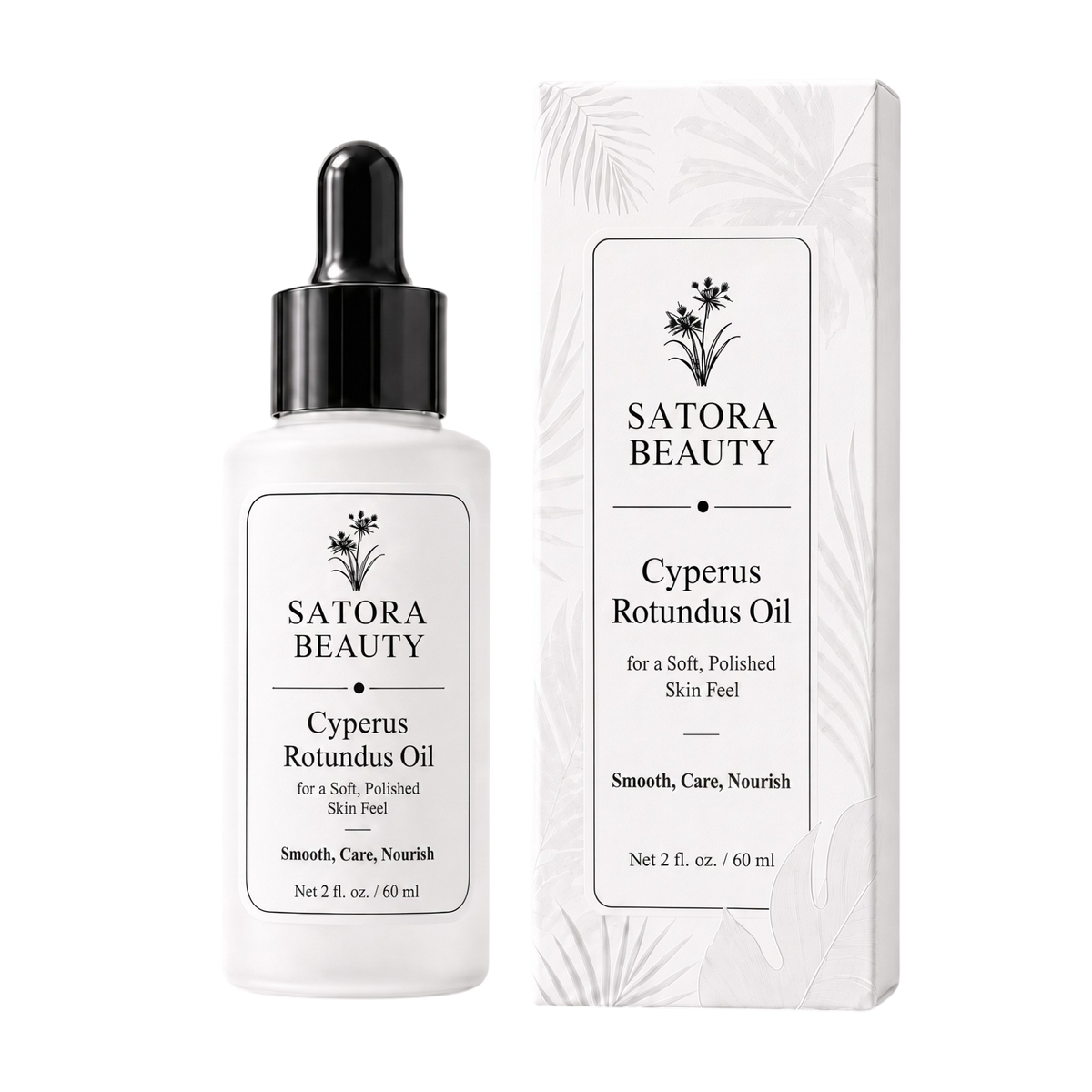
Satora Beauty Cyperus Rotundus Oil bottle and carton